
Our Story
The Before
No first-time home buyer goes into a purchase agreement thinking, “One day this house will try to kill me.” At least, I didn’t anyway.
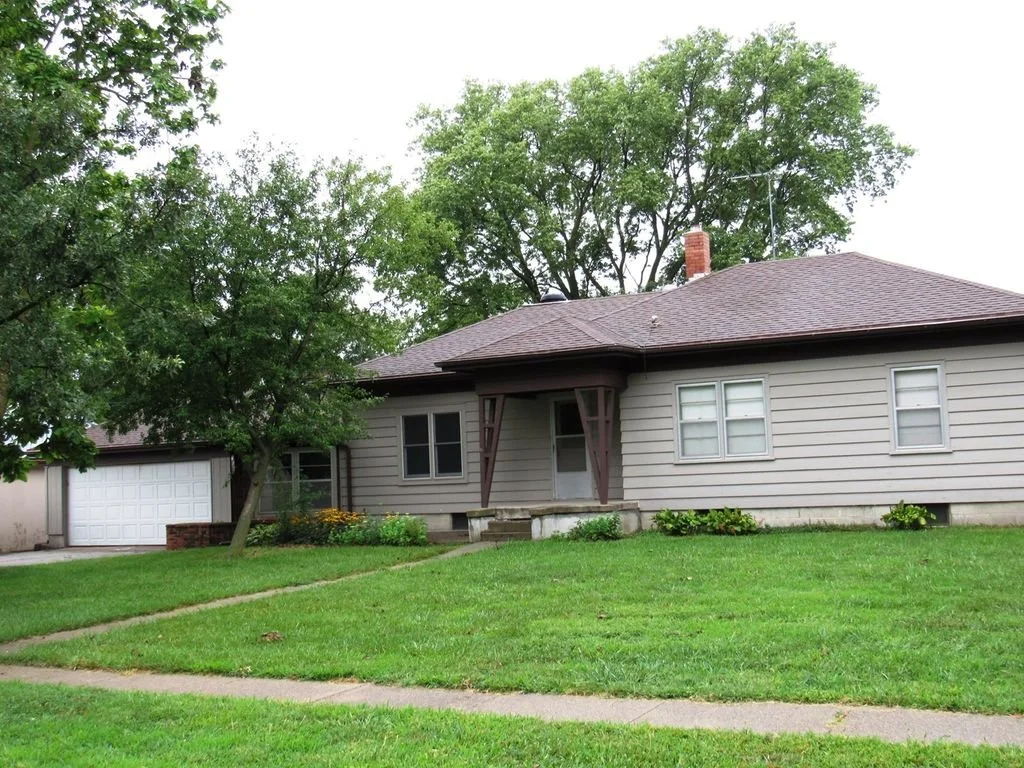
Ten years ago, on a rainy November afternoon, I shakily scratched my signature across a contract that millions of Americans dream about: I bought my first house. Not just a house. A 1950s mid-century ranch loaded with potential.
Sure, it was dated, with 70s wallpaper covering just about every visible surface, but all I could see was opportunity. And the price was right.
I vowed to do my best to restore it to its former 50’s glory. As a therapist working at a nonprofit, my salary only allowed me to make small changes each year, but I was determined to live here for the rest of my life, so what did a couple of years matter?
Flash forward to 2020. A large hailstorm hit and demolished the roof of the house. At the time, I was thrilled—the dishwater brown color was less than ideal, and I was chomping at the bit to add something with a bit more curb appeal. If only I would have known how pivotal a simple hailstorm would be in my future trajectory.
Insurance covered the entire roof replacement and noted that the flashing around my chimney had been severely damaged. I hired a local company with good reviews to do the job and put down the first insurance check as a down payment (mistake #1).
The roofing company scheduled a date the following week to complete the job and then just… ghosted. I texted and called—no answer. I didn’t know what to do. They had my first insurance allotment, and I didn’t have the funds to pay another company, so I was stuck.
Months later, the owner of the company reached out to inform me that they were having “family issues” within the business, which is why it took so long to get back to me. Ok, whatever, just get my roof done.
The process was about as simple as the start: several weeks of miscommunications, not completing jobs properly, and using the wrong color or materials. I was beyond relieved when I pulled up to the house after work one day to be greeted by a (finally) completed roof.
And that was it! Or so I thought.
The Slow Leak
About 6 months later, we were in the midst of COVID, so I was seeing telehealth clients from my home office when I noticed the ceiling paint around the chimney starting to bubble. I thought it was odd, given that I had a new roof. After a few days, the ceiling began to crumble, dropping tiny pieces onto the floor. Concerned, I contacted insurance and had the adjuster come out to file a claim.
As it turned out, the roofer had taken the money from insurance to fix the flashing, claimed they fixed it, but didn’t. It was the same exact flashing around the chimney, and that flashing had been dripping a slow leak of water into my office every time it rained or snowed.
Insurance (naturally) bailed. After a battle with the roofer, he agreed to “do me a favor” and remove the chimney, as he believed the chimney was the source of the issue, not the flashing he failed to fix. He also refused to repair the ceiling drywall, claiming that wasn’t his fault.
The roofer’s “favor” of removing the chimney cost me a new AC and furnace unit, as they were both vented through the chimney. The first day of hot weather, I learned that something was wrong. All of my air ducts started sweating. The walls in my basement and dining room were so condensated that I could write my name on them like a steamy car window. I contacted the company that installed it; they couldn’t find anything wrong. I hired a contractor to fix the ceiling, and life went on.
The Physical Decline
That’s when the symptoms started.
Insomnia was the first to strike. I would toss and turn trying to fall asleep, only to be awakened by an urgent need to pee every night at 3 a.m. I chalked it up to work stress. The world was experiencing a global pandemic, after all, and I was managing my own feelings while juggling a caseload of 150 clients who were all processing the trauma of it all.
Stuffiness and sinus drainage were next. I figured there might have been a new type of pollen in the air, though allergies had never been a real issue for me—only ragweed and mold.
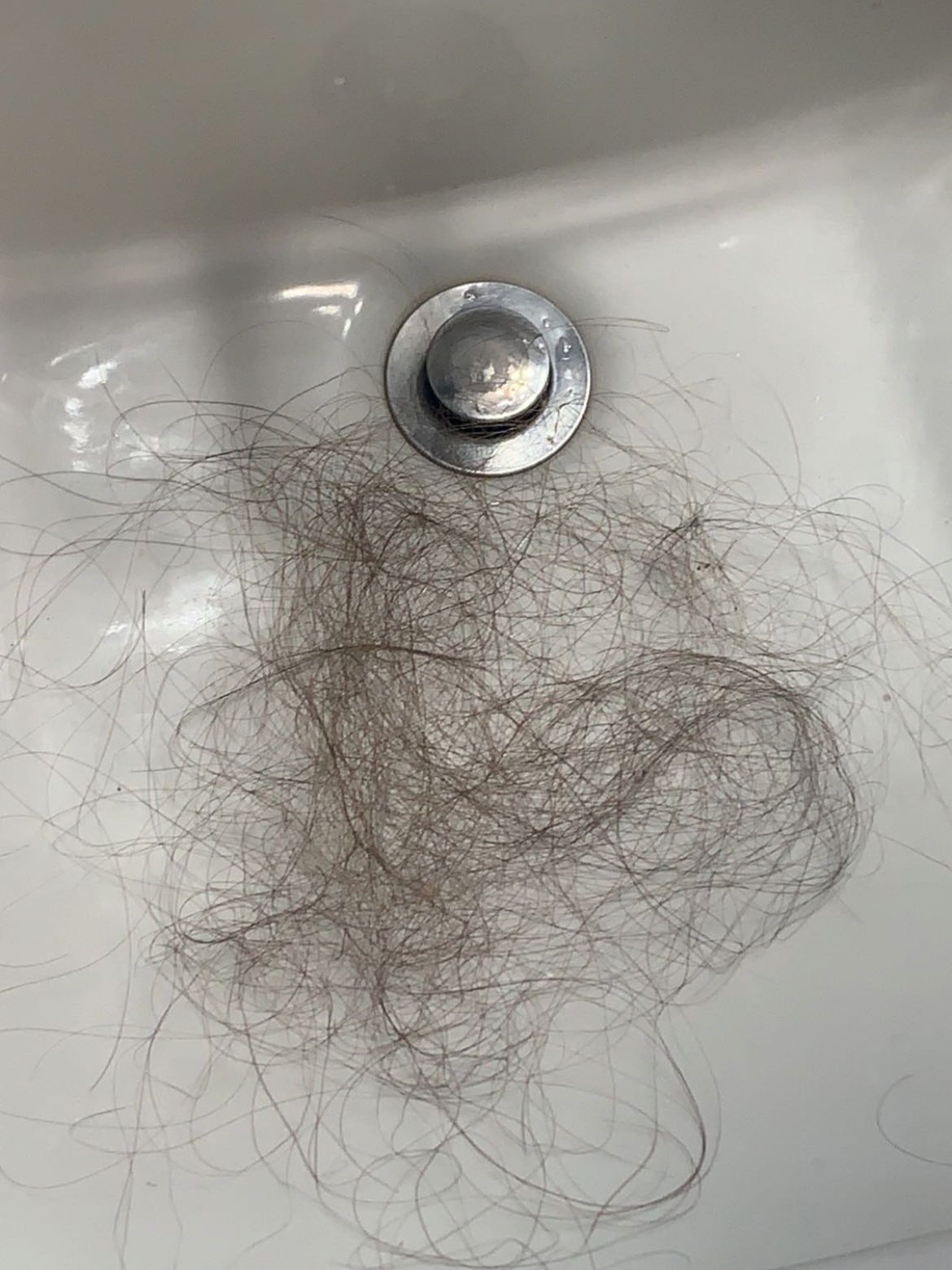
(Sorry for the hair jumpscare)
Hair loss followed. Big clumps clogged the shower drain each night. I’ve always been a shedder, but never to the point of questioning my future need for a wig.
Then, depression set in. I’d never experienced despair quite like it: not wanting to die, but chronic thoughts of death looped in my mind, wondering how I could possibly stand living another year. I would break down and sob for no conceivable reason, sometimes for hours.
A feeling I can only describe as “vampire bite fatigue” set in. It was as if someone took a straw, stabbed it into my back, and sucked out all energy. This would set in every day at 3 p.m. Around this time of day is also when the depression would hit hard, and I would get extremely cold. No matter the time of year or weather, I would layer up in sweaters and blankets, and it still didn’t feel warm enough. My fingers and toes would turn pure white and lose all feeling in them, like I had just been outside in a snowstorm without gloves.
Weirdly, the cold sensation was what concerned me the most. I’m a notorious hot box and had never felt cold in my life up until that point. Taking an inventory of all my other symptoms, I realized I might have a thyroid condition. Hypothyroidism was heavily emphasized in grad school as one of the first diagnoses to test for if clients experienced a sudden, unexplainable shift in mood.
I scheduled with my doctor countless times. Each time, he met me with “maybe you’re just depressed” and followed up with a bipolar questionnaire. If I did indeed have bipolar, I would be ok with accepting it—I am a mental health therapist, after all—but everything I know about bipolar went against what I was experiencing.
When I expressed my concerns about a thyroid issue, he all but rolled his eyes, stating that “at 29, you’re too young for a thyroid issue.” Finally, I asked to be referred to an endocrinologist, to which he responded that it would be “a waste of my time, their time, and your money.”
My health continued to decline.
The Pattern
In March of 2021, I began dating Ben.
Two weeks later, my heart rate suddenly jumped to 150 bpm at rest, which prompted me to seek a heart evaluation.
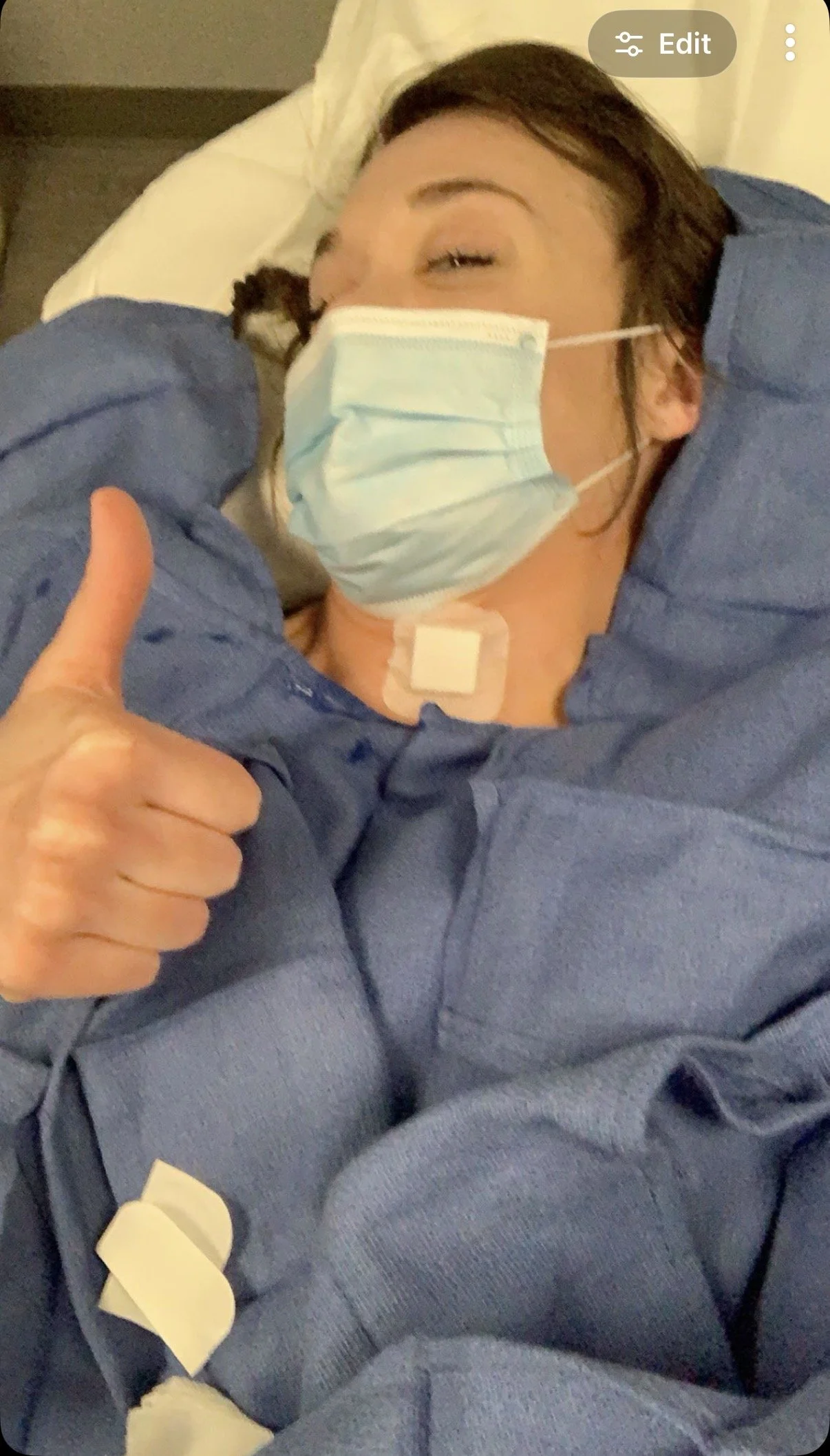
The cardiologist confirmed my heart was perfect, but my thyroid was wrecked, and promptly sent me to an endocrinologist, where I was diagnosed with Graves’ disease.
An ultrasound revealed large nodes on my thyroid that needed to be biopsied. I started treatment immediately.
The treatment for Graves’ seemed to be working, and I was able to settle into dating Ben. I spent most nights at his house, away from my home. I even worked from his home office while he was away at work. Miraculously, I started to improve. My thyroid condition went into remission, and I felt some resolution with my health for the first time in a year or so.
In November of 2021, Ben sold his home and moved in with me. A month or two later, my Graves’ relapsed. I began waking up every morning with a dull ache in my left side under my rib. A CT scan revealed that my spleen and liver were mildly swollen. No one could tell me why.
My big toes lost feeling and were tingly again. Blood tests started showing elevated red blood cells, hematocrit, and hemoglobin levels. My iron levels were high, and my ferritin was very low. My estrogen was through the roof, and my testosterone was almost nonexistent.
I felt unwell a majority of the time, but couldn’t describe why. I left my original primary care doctor after his failure to diagnose my thyroid issues and found a new one. My new PCP was concerned with my blood cell levels and sent me to a hematologist-oncologist. I spent a thousand dollars on a gene mutation test, as they believed I may have a rare blood cancer. Everything came back normal.
They decided to draw blood every three months and monitor me for a year, as no one knew what else to do.
Aside from the physical symptoms, the most disheartening part of all of this was how crazy I began to feel. I physically felt like something was wrong; the tests all showed that my body was not operating quite right, but no one could tell me why. I began to wonder if I was just a hypochondriac. I started ignoring symptoms as they would appear and wrote them off as thyroid-related.
A couple of months into living together, Ben started to get sick. He would come home every other month with some sort of cold, which would last for weeks. His arms developed little red spots up the back of them. Sleep was disturbed regularly by both of our need to pee or his snoring due to sinus congestion. We just felt… unwell.
Could it be Mold?
Ben’s health was the catalyst for me to start exploring the possibility of mold. I had wondered for a year or so if the leak had contributed to some sort of mold growth.
I met with my PCP and asked if there is any test that can identify mold toxicity in the body. She ran a urinalysis that tested for mycotoxins, the byproduct of toxic mold that affects the body. My results showed a staggering amount of mycotoxins resulting from aspergillus/penicillium mold.
Fear set in that we actually could have a mold problem in the house. I hired a mold expert to come inspect the home and was told the house is bone dry and there is no sign of mold, so testing would not be worth the money. I got another company to give a second opinion and was told the same thing.
The “I’m crazy” feeling started to rear its ugly head at that point, and I dropped it. I had read that mycotoxins can also come from coffee or grains, cut those out of my diet to be safe, and dropped the idea once again.
The Discovery
Ben and I got married in August of 2025. Like many newlyweds, we settled into marriage by getting a puppy at the end of October. We both still felt sick, but we were enjoying life.
It was the beginning of December when our puppy, Martini, started getting sick. Originally, the breeder informed us that he was incredibly food motivated. When we first got him, he would eat all his meals and beg for snacks.
After a few weeks, though, he lost interest in his food. It got to the point where we couldn’t get him to eat anything, including the vet’s high-calorie “rescue” food. He went an entire week where he didn’t eat anything but two eggs and a lick of peanut butter. We took him to the vet three times, just to have every test come back, you guessed it, normal.
In January of this year, we decided to start renovating our bathroom. It was the last part of renovations before the house was “complete.” I mentioned to our contractor that I suspected mold, but no one ever seemed to find anything.
He cracked into the bathroom wall, the one shared with our bedroom, and found black mold up the entire wall.
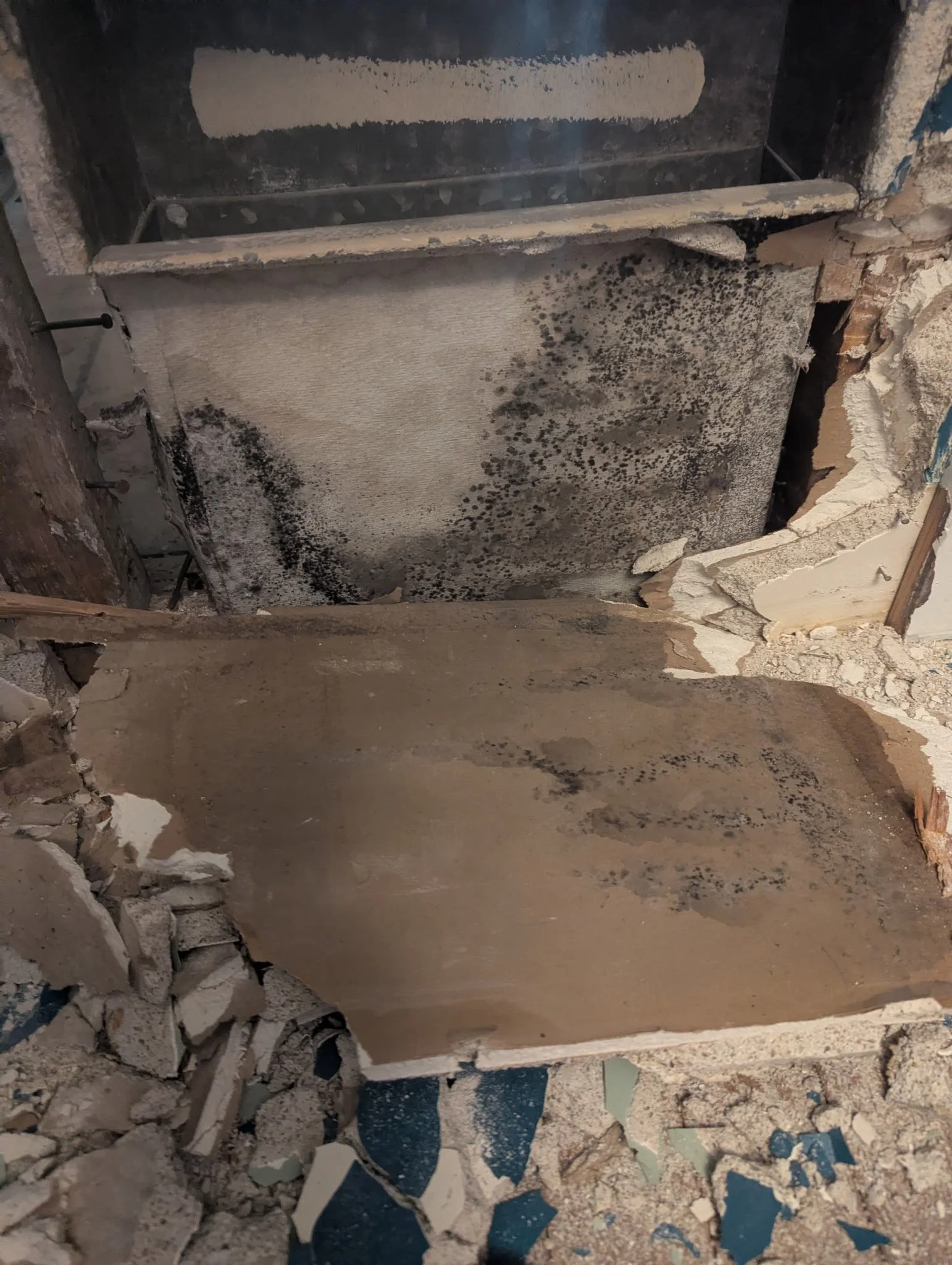
Apparently, the sweating air ducts caused asbestos insulation around each vent to become wet and moldy. Honestly, I felt relief. I knew there had to have been mold somewhere in the house, and this felt like the answer.
Ben and I decided we would move in with his parents for the week so our contractor could remove the asbestos and mold safely.
What started as a couple of vents filled with mold turned into walls. Our contractor urged us to contact a mold expert, as he felt he was in over his head. We reached out to someone out of Omaha who came down and tested.
If you are unfamiliar with mold air samples, apparently a “healthy” level of mold (similar to what you would find outside at any given time) is 500-1000 spores per cubic foot of air. Our mold test revealed that the spore count in our home was almost 700,000 spores per cubic foot of air in some areas. The wall of my office was the worst—the wall of the room I spent five days a week in.
Losing Everything
We quickly hired a remediation company and began moving items out. At first, we thought we would just be moving stuff into storage. Then we learned we would be losing everything porous—our brand new mattress (our first purchase together that we just finished paying off), our couches, chairs, rugs, curtains, clothing—almost everything.
The despair and confusion was indescribable. Watching our entire life get tossed in a dumpster when everything looked perfectly fine was devastating. It felt like a waste. Surely we could have kept those things, right?
After talking with our remediation company and doing extensive research, we confirmed that anything porous with cushions or fabric acts like a sponge that sucks up all the spores in the air. HEPA vacuuming can’t reach all the spores to get them out, and steam cleaning just introduces moisture to the spores that are inside, which would basically “feed” the mold.
While processing that blow, we then discovered that we would have to remove every wall of the house, essentially gutting it to the studs. This would ensure we properly removed all the mold, as there had been mold in every wall that had been broken into so far.
Much to our chagrin, we realized this gut also included our brand new kitchen remodel, as there was mold on the cement board the original cabinets and our brand new tile were built onto.
The best part about this entire process is that our insurance won’t cover a dime of it. They acknowledge we can’t live in the house and that the mold is pervasive, but won’t cover mold unless it’s related to a “plumbing” leak, which they ruled this to just be caused by a “regular leak.”
The Present
Currently, we are continuing to process the disaster. Neither of us knew it was remotely possible to lose… everything… and not have insurance cover it.
Worst-case scenarios that have crossed probably every homeowner’s mind are events like a fire, flood, or tornado. We never imagined we would lose our health and possessions to something we couldn’t even see, and no insurance check to start again—especially at the age of 35–40 and newly married.
The days are getting a bit easier as the shock wears off and reality sets in. Our house is just wood studs and exterior walls. It’s bizarre to see, but we’re slowly allowing ourselves to imagine the possibilities.
Remediation was just completed a couple of days ago, and now we are in the process of testing the house again to make sure we are in the clear to rebuild.
As far as our health is concerned, Ben wakes up with a clear nose every morning now, and my blood results are all returning to normal. Even Martini (our little poodle puppy) has stopped throwing up every morning and is gaining weight again, which is the one victory in all of this. Who would have thought that a house could cause all of this?
It also makes us wonder how many people with chronic illness or unexplained symptoms are reacting to unseen mold lurking behind their walls.
I have a thousand more things to say about this topic, but our story is why we chose to start this website. No one we know has gone through this situation before, but after posting a TikTok video that has over a million views, we learned that thousands of people out there have gone through this exact same scenario.
We are taking lemons and turning them into (moldy, ha!) lemonade and are hoping someone else can learn from our situation, or at least take comfort in the fact that they are not alone.
We will continue to post updates and write about the process as the weeks continue. Please check out the rest of our site, learn about the dangers of mold, and spread the word to educate others. We are not mold experts by any means, and that should be noted—we have just been experiencing the impacts of it and learning.
If you would like to support our rebuild or our cause, we’d encourage you to check out our merch page. Ben and I are both artists and have designed some apparel and merch to try to fund our rebuild.
Thank you so much for being here!